
Early, lower-competition keywords can move within 6 to 8 weeks. Competitive terms typically take 3 to 6 months for the first meaningful movement.
What an SEO Project Actually Looks Like: A Walkthrough?
Admin / July 23, 2026
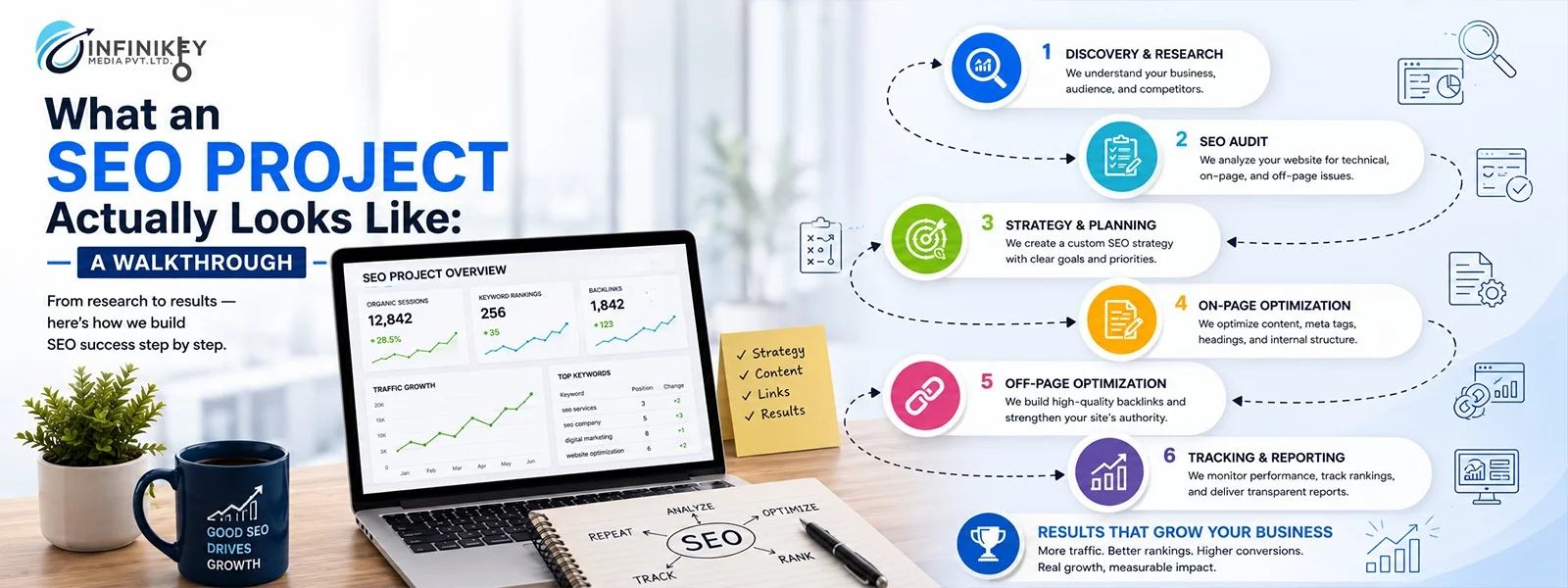
A realistic look at how an SEO engagement unfolds month to month, using the kind of work we actually do for clients.
"How does SEO actually work" is a fair question, and most answers are too vague to be useful. Here's a more concrete version, based on the shape our own projects typically take.
Month one: audit and foundation
The first month is rarely about writing new content. It's fixing what's broken — indexing issues, missing meta tags, slow pages — and building the keyword map the rest of the project will follow. For a service business with multiple locations, like Power Solution Services covering UPS rental and repair across Noida, this stage often includes deciding which city or service pages are worth building first.
Months two to four: content and structure
This is where service pages get rebuilt around the right keywords, and supporting blog content starts filling the gaps the audit found. For manufacturers with a wide product range — a scaffolding and shuttering rental business like Amirsons Scaff, for example — this usually means separating informational blog content from the transactional service pages, so the two don't compete with each other in search results.
Months three onward: links and authority
Once the on-site foundation is solid, link building starts in parallel. This isn't about volume — a handful of relevant, topical links do more than dozens of generic directory listings. This stage runs continuously rather than in a single burst.
Ongoing: tracking and adjusting
From month three or four onward, most of the work is monitoring what's moved, what hasn't, and adjusting the plan. Rankings for competitive local terms rarely move in a straight line — a keyword can sit still for weeks and then jump once enough signals accumulate.
None of this is unusual or secretive. The businesses that get frustrated with SEO are usually the ones expecting month-one results from what's actually a month-three-to-six process.
Also Read - How We Audit a Website Before Recommending SEO Work?
FAQs
-
When should I expect to see movement in rankings?
-
Does the SEO plan change once it starts?
-
Do I need to provide anything during the project?Usually just access to your website and Google Business Profile, and quick feedback on content drafts when needed.
-
How often will I hear updates?Most projects run on a monthly reporting cycle, with quicker check-ins if something urgent comes up.
-
What happens after the first six months?The work shifts from building the foundation to expanding content and links on what's already working.


 ⭐ Write a Review